Walk into a high-performing metal fabrication shop in 2026 and the differences stand out immediately. The floor hums with synchronized cells, not isolated islands. Machines talk to each other and to the ERP without a human in the loop. Tooling racks carry QR-coded inserts that reorder themselves. Weld fixtures heat with induction to eliminate distortion. Inspection stations move in-line, not at the end. It is still a world of chips, spatter, and steel, but the decisions ride on data, and the best shops treat manufacturing as a living system that learns.
This shift is not confined to Silicon Valley hardware startups. Canadian manufacturer groups, Underground mining equipment suppliers in Sudbury, food processing equipment manufacturers in the Prairies, logging equipment builders on the coast, and precision CNC machining specialists across the Great Lakes are all participating. The pressure is familiar: shorter lead times on build to print work, tighter geometries from industrial design company partners, persistent labor gaps, and global customers who expect fully traceable parts from a CNC machine shop at small-batch economics. What’s new is the practicality of the tools. Many of the technologies that sounded aspirational five years ago now pencil out on a three-year ROI.
Below are ten innovations that, taken together, are rewriting what a metal fabrication shop can do and how it feels to work in one.
1. Closed-loop scheduling that actually closes the loop
Scheduling software used to be a static Gantt chart that went stale after lunch. The new class of systems ingests machine telemetry, operator feedback, and supplier signals in real time. A good implementation reads cycle times directly from machines, reconciles them with planned routings, and then reassigns jobs when a laser goes down or a powder coat batch runs hot. The loop closes because the data feeding the schedule comes from the floor, not from optimistic standards set during a quoting sprint.
We implemented one such system in a custom metal fabrication shop that builds mining grizzly screens. The original plan called for two shifts of press brake time, 12 hours total. The cell reported a true average of 30 seconds more per bend due to a new abrasion-resistant plate lot. The scheduler responded by pulling in a second brake for the thickest ribs and nudged the weld team to prep fixtures earlier. Delivery held, overtime budget did not explode, and the update to the brake’s bend library persisted for the next order.
For shops that do both steel fabrication and precision CNC machining, the benefit compounds. Cross-department orchestration reduces stranded WIP. The pitfall, predictably, is trust. If operators feel the system is second-guessing them, they will stop clocking accurately. Bring them into the setup, validate early assumptions with short pilots, and attach a visible win to week one, such as releasing a coil on-time by de-bottlenecking the deburr room.
2. AI-assisted CAM that learns your defaults
Programmers have always built personal https://waycon.net/capabilities/prototypes/ libraries of best practices, from micro-lift values for 304L on 3 mm to favorite lead-ins on plasma cut A36. In 2026, CAM software makes these tribal heuristics a first-class citizen. The tool now suggests stepdowns for a given material lot based on prior runs, picks fixtures from a validated pool, and flags when a customer’s corner radius is incompatible with your available end mills. It recognizes stock conditions from a probe hit and tweaks toolpaths accordingly.
At a CNC machining shop that serves food processing equipment manufacturers, adaptive recommendations trimmed roughing time on 316 parts by 12 percent while extending insert life. The software learned that a particular 50 taper horizontal tolerated more aggressive radial engagement when the spindle temperature stabilized after 18 minutes. Programmers didn’t discover that subtlety on a hunch, the system surfaced it from hundreds of prior cycles.
None of this removes the need for a sharp programmer. It separates tastemaking from rote decisions, which is essential when one person supports six spindles and a mill-turn. Be deliberate about guardrails. Lock down rules that affect safety, like minimum wall thickness under clamping loads on thin-walled 6061 weldments or passivation allowances for parts destined for dairy lines. Let the system learn feeds, speeds, stepovers, and entry moves on stable materials. If you run build to print for an Industrial machinery manufacturing customer base, feed the “golden” posts and macros into version control like software, and require code reviews for any change that touches probing or tool length offsets.
3. Hybrid laser and waterjet cells for mixed material realities
CNC metal cutting has diversified. Shops that used to run only fiber lasers now integrate waterjet heads into the same cell or just across the aisle. The reason is clear. Fiber lasers are unbeatable for steel and aluminum up to certain thicknesses, especially with nitrogen assist. Waterjet adds capability on copper, brass, laminated sheets, gasket materials, and pre-hardened plate where HAZ is a problem. When the scheduling system and part routing understand both, you free a cell to pick the right tool without reprogramming from scratch.
A Canadian manufacturer that supplies Underground mining equipment suppliers used this hybrid approach on Manganal steel wear parts with tight fit-up tolerances. Cutting profiles on waterjet eliminated post-cut stress relief. Holes still went to the laser, where pierce speed and quality are superior. Time per assembly dropped 20 percent, and the scrap rate, previously hidden in rework toward the end of the line, fell by half.
Waterjet pumps and orifices carry a cost, and garnet waste needs management. Laser optics and dust extraction need their own care. The advantage is flexibility. With material volatility, promising a lead time often matters more than carving the absolute fastest path on one process. A hybrid cell that can say yes to more material types keeps order books steadier.
4. Induction-assisted welding and distortion control
Distortion is the silent killer of downstream time. A weldment that needs two hours of press work and a torch session to square up erases savings upstream. Induction heating, applied with discipline, has matured into a practical tool for consistent weld quality. Preheating thicker sections reduces hydrogen cracking risk and controls shrinkage. Post-weld heat with induction allows predictable stress relief without tying up an oven.
One welding company we work with builds large custom steel fabrication frames for biomass gasification modules. The team used to fight flange warping on 40 mm plate, then chase flatness on a Blanchard grinder. By adding induction preheat to 150 C and combining it with copper backing and a sequenced skip-weld pattern, they reduced rework by 70 percent and nearly eliminated straightening. The induction units paid for themselves in six months.
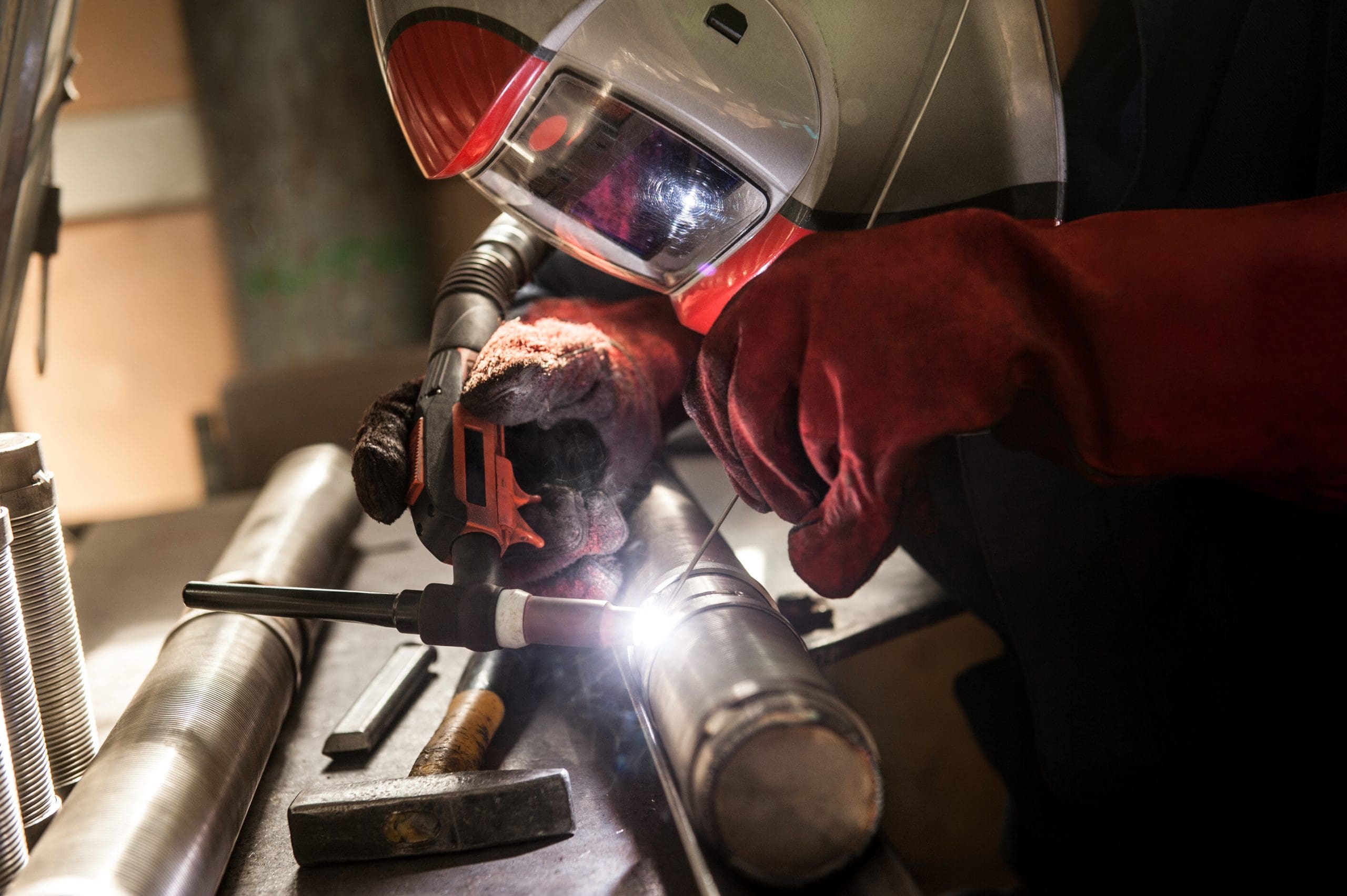
Welders are right to be skeptical of gadgets. Induction is not a magic wand. You need a pocket guide of parameters by material and thickness, and you must treat it like a process variable that gets recorded. For shops with precision CNC machining downstream, the benefit is measurable in probing reports. Bores and faces hold position within a few tenths more reliably, which means fewer machine-side compensations or hinge-boring heroics at the last minute.
5. Sensorized fixturing and smarter quick-change
Fixtures have always been where a custom fabrication shop differentiates itself. The change is that fixtures now tell you when they are wrong. Low-profile load cells confirm clamping force. Embedded RFID tags identify the fixture to the machine, pulling the correct work offset and program revision. Proximity sensors verify part presence and orientation before a spindle moves. For bending, angle sensors on the ram and die monitor springback automatically on the first part, not the fifth.
On a family of stainless manifolds for a dairy OEM, we integrated a pallet system with a simple reed switch that confirmed the correct locator pin was engaged for each variant. Prior to that change, a single misloaded pin in a month was enough to set back deliveries by a day. The new fixture saved only a handful of minutes each setup, but it prevented the stray catastrophic mistake that wrecks a day.
Quick-change practices deserve the same rigor. Too many shops invest in premium zero-point bases and then hang onto ad hoc top plates that require shimming and hand fitting. Treat top plates like assets with their own process control. If your Machine shop turns large flange rings, add dowel repeatability features to each top plate, and record CMM verification once per quarter. Those small rules keep precision CNC machining repeatable across shifts and across sites.
6. Composable automation, not monolithic cells
A decade ago, automation meant a compact, vendor-specific cell wrapped around one machine. Too many of those islands ended up underutilized when part mix changed. In 2026, the smarter approach is composable automation. Think carts with standardized docking points, robot arms on mobile bases, and grippers that swap in seconds. Use vision to pick from trays when precise nests are impractical. Link the shop with a common protocol so a robot can serve a press brake this month and a deburr station next.
One metal fabrication Canada team builds frames for logging equipment and skidder attachments. They move a 12 kg payload robot between a saw, a drill station, and a powder coat load area, all within the same week, guided by a light changeover checklist and common electrical connectors. The robot’s program library uses modular routines: find, pick, place, inspect. Operators were cross-trained to load programs and swap grippers. Instead of chasing lights-out machining on a single mill, they achieved reliable 20 percent utilization gains across three formerly starved islands.
The constraint is floor discipline. Cables on the ground will trip robots, and casual pallet placement breaks vision routines. Start with one reusable cart and one robot, then build standard work that keeps stations automation-ready. Resist custom coding that works only for one part. Composable beats bespoke when demand shifts.
7. Inline metrology and distributed quality
Quality used to live in a room with granite and a gatekeeper. In a modern CNC metal fabrication environment, inspection rides along with the part. Laser scanners mounted at the end of a tube laser verify cut geometry against the model. Portable CMM arms validate critical weldments before they leave a fixture. Probing routines in machining centers do more than set zeros, they measure critical faces and write the data back to the traveler. If a dimension trends out, the scheduler knows within minutes, not days.
A Machining manufacturer serving mining equipment manufacturers implemented in-process probing on bores that used to drift as inserts wore. By tying bore size to tool wear compensation automatically, they held a 12.000 mm hole to a Cpk above 1.67 with standard P20 inserts. The inspection department still audited, but firefighting faded. A separate deviation in flatness on a large baseplate showed up at the welding fixture with a laser tracker, not at final assembly. The fix took hours, not a week.
Distributed quality does not absolve final inspectors. It changes their role. They become coaches who build feedback loops where they matter most, and stewards of the measurement systems analysis. Invest in calibration discipline. An army of handheld scanners does no good if they disagree on a simple gauge block. Tie data back to the job record so you can answer a customer’s traceability request without rummaging through notebooks.
8. Material intelligence that handles volatility
Supply chains remain unpredictable. Material substitutions are slick in theory but painful on the floor. The shops that cope best catalog their material knowledge and make it computable. That means recording mill source, heat numbers, and actual chemistries when available, then linking that to process parameters. If you discover a particular heat of A514 likes a longer pierce on laser and responds better to a specific weld wire, you want that knowledge to travel with the next order automatically.
One Steel fabricator that supports bridge work did the unglamorous job of standardizing MTR capture and tying it to routings. The payoff came during a six-month stretch of substitute plate grades. They could keep a larger variety of plate on hand with confidence because their CAM posts, bend libraries, and weld PQRs already anticipated the real behavior of each lot. The scheduling system steered jobs requiring tight forming radii to the lots with proven ductility, and sent bracket work to the rest. Overtime hours dropped even as material variety increased.
Automation can help, but there is no avoiding the legwork of building the database. If your manufacturing shop buys cut blanks from service centers, ask for consistent MTR formatting and plan to capture it at receiving. Use QR codes on skids to make the link between lot and job automatic. The best time to start was two years ago. The second-best time is now.
9. Electrification in heavy equipment drives new fabrication disciplines
Electrification is no longer just for cars. Mining haul trucks, underground loaders, forestry carriers, and even some stationary plant modules are moving to battery or hybrid systems. For metal fabrication shops that serve this sector, the change shows up in enclosure design, cooling integration, busbar mounting, and EMI considerations. Brackets that used to hold hydraulic lines now route high voltage cables, which means different bends, different clearances, and strict radius control. Battery tray weldments demand rigidity and crash energy paths without unnecessary weight.
A custom fabrication team that supports an OEM of underground loaders had to relearn some habits. Welded studs for cable clamps needed a different sequence to avoid distortion before e-coat. Busbar supports had to be machined from copper alloys that aren’t friendly to classic toolpaths. They solved it by splitting work: copper machining went to a CNC precision machining cell with specialized tooling and a mist capture plan, while carbon steel rails and frames stayed in the main flow with updated inspection points for hole quality and edge radius requirements set by the cable supplier.
If you are a Machinery parts manufacturer stepping into electrification, bring the suppliers into the DFM conversations early. Cable OEMs will define minimum bend radii and allowable edge conditions. Thermal management vendors will have straight advice about flatness and gasket compressibility that should land at the laser and bend station, not only at assembly. The earlier you reflect those constraints in CAM and weld sequencing, the fewer ugly assemblies you discover after paint.
10. People systems that respect skills and make them scalable
The best technology plateaus fast if people hate using it. The scarcity of experienced tradespeople is not going away, so the shops that win grow their own. The new playbook borrows from software and lean but sounds like manufacturing. It includes structured on-ramps for green operators, simulation time before real machine time, and visual libraries that show, not tell. It also includes pay structures that reward cross-skill depth without forcing every expert into management.
In a CNC machine shop I support, new hires spend their first week on a simulator that mirrors the shop’s control, then run low-risk parts with a coach shadowing. Scrap in those first 90 days fell by 40 percent. More important, the new operators felt safe admitting uncertainty. The shop tied skill matrices to cells and scheduled cross-training based on heat maps, not hunches. When a senior brake operator went on leave, a cross-trained operator filled the gap with only a small hit to cycle times.
Documentation matters. Video a perfect setup, then tag it to the part number. Keep work instructions as living artifacts, not PDF fossils. When a change lands, make sure the person who will use it helped write it. That small amount of respect does more for adoption than any memo. For small custom machine builders who also run precision CNC machining, this can be the difference between a healthy backlog and a perpetual crisis.
Where these innovations show up by sector
Not every shop needs the same mix. The specific blend depends on what you make, who you serve, and how often your part mix changes.
- Underground mining equipment suppliers and mining equipment manufacturers benefit most from composable automation, inline metrology for large weldments, and material intelligence for abrasion-resistant steels. Hyper-accurate fixturing and induction-assisted welding control distortion on heavy frames. Food processing equipment manufacturers lean on AI-assisted CAM for stainless, documented passivation processes, and sensorized fixtures that safeguard sanitary designs. Traceability and surface finish control matter as much as tolerance windows. Logging equipment and heavy forestry attachments push quick-change and hybrid laser/waterjet cutting to handle thick plate variations and weathering steels, plus powder coat pretreatment discipline. Biomass gasification and other process skids gain from closed-loop scheduling across disciplines: pipe, structural, panel, and CNC metal fabrication. They often benefit from modular automation for kitting and assembly, where pick-to-light or cobots reduce missing hardware incidents. An Industrial design company partner working with a custom metal fabrication shop sees dividends from early DFM sprints that encode design intent into CAM templates. When the design team specifies a 2 mm internal radius, the shop’s bend library and punch tooling reflect it from day one.
Economics that make sense without hero math
Capital budgets have limits. The good news is that many of these innovations are modular and financeable with realistic payback. Inline probing rides on existing machining centers with a software license and some training. Induction units for welding can be leased, then rolled across bays. Composable robots start with a single arm, a couple of grippers, and a wheeled base. Hybrid cutting does cost more, but the option value during volatile material cycles pays for the delta in many manufacturing shops that promise customer delivery across a fickle supply chain.
Case in point: a mid-sized Machinery parts manufacturer in Ontario invested roughly 200,000 CAD in a mobile robot, vision kit, and three standardized carts. Over twelve months, they recaptured 2,300 hours of operator time, which they redeployed to a new CNC metal fabrication cell. Scrap related to misloads dropped by a third. The next year’s automation budget went to inline metrology, not more robots, because the data showed quality was the bottleneck.
Be wary of silver bullets. A plantwide MES without strong change management is a way to burn a year. A highly specialized laser with proprietary nozzle tech locks you into consumables that sting when exchange rates swing. Choose open standards wherever possible. Keep pilots small, then scale what works.
Data plumbing is the unglamorous backbone
Every innovation above assumes data flows cleanly. That means your CNC machining services and fab cells can expose real cycle times, your ERP can ingest and interpret them, and your quality system can attach measurements to parts. It also means your post processors and machine controls handle versioning reliably. If you still rely on a shared drive named “Programs NewNew2,” fix that first.
On a practical level, set naming conventions for parts, subassemblies, programs, and fixtures that survive mergers, customer renames, or an extra hyphen in a drawing. Use APIs where your software offers them. If a vendor cannot provide a simple data export for run times, alarms, and tool life, ask why. When you integrate, spend money on the last mile: barcode scanners that actually scan oily labels, shop-floor tablets in cases that can handle coolant mist, and Wi-Fi that doesn’t die behind the laser dust collector.
One shop I visited had impeccable equipment but treated tool life data like gossip. Once they standardized on a tool presetting routine and pushed measured lengths and diameters digitally to the machines, their setup errors dropped to near zero. They also discovered that one line of indexable drills, used on a family of steel hubs, consumed 15 percent more inserts than its twin from a different brand. The ensuing switch paid for the data project in under a quarter.
Sustainability that doesn’t hurt throughput
Customers are auditing carbon footprints at the part level. Energy, scrap, and rework are not just cost lines, they are emissions lines. Good news again: the same practices that tighten schedule and quality usually cut energy and waste. Induction preheat targets heat precisely, reducing gas usage. Collision-free quick-change shortens warmup cycles on machining centers. Smart nesting on CNC metal cutting reduces skeleton waste, which matters when plate lead times stretch and costs spike.
A steel fabricator supplying rail components tracked press brake energy consumption before and after implementing hot-standby modes and better job sequencing. By clustering jobs to minimize die swaps and powering down intelligently, they cut energy use by about 9 percent with no hit to output. They also cut lost time by removing a sloppy die cart that caused changeover delays. A better cart is as green as a new inverter drive when it means less idle time.
For biomass gasification and other emerging energy sectors, this alignment is especially tight. Demonstrating that your custom steel fabrication process produces fewer emissions per module is not fluff in a bid. It is a differentiator that procurement teams can defend to their boards.
How to start, even if you are small
There is a temptation to wait for a perfect plan. Don’t. Pick one or two changes that remove real pain, then create compounding wins. If you struggle with rework on weldments, adopt induction and a basic inline measurement routine before buying a robot welder. If programming is the bottleneck, pilot AI-assisted CAM on a narrow family of parts, but keep a skeptic in the room who knows your shop’s quirks.
A simple sequence works:
- Map one product family from quote to ship. Identify two delay hotspots with data, not anecdotes. Pilot one technology that addresses each hotspot. Timebox the pilot to four weeks, define success in numbers, and appoint one owner. Document what you learn in living instructions and short videos. Train the next crew. Scale to the next family only when the first is stable.
That’s it. Keep capital pointed at the constraint. When the constraint moves, shift your attention. You will find that the top ten innovations are not a shopping list, they are a toolbox. Deployed with judgment, they make a manufacturing shop more resilient, more profitable, and a better place to work.
A note on partnerships
Few shops build everything alone. When your workload crosses into areas like copper machining for busbars, deep-hole drilling for hydraulic blocks, or multi-axis contouring for custom machine assemblies, call a partner who lives there. A CNC precision machining specialist with the right fixtures and coolant management can hit a tolerance on OFHC copper that would torture a generalist. A steel fabricator with panel line experience will get you straighter beams faster than a makeshift jig.
Choosing partners is part technical, part cultural. Look for process control, not just flashy machines. A shop that treats MTR capture, fixture maintenance, and tool presetting as core disciplines will be easier to integrate. For cross-border work, metal fabrication Canada partners often offer strong traceability and quality systems aligned with North American standards, plus proximity to mining and forestry ecosystems.
The craft still matters
Despite all the software and sensors, a seasoned operator still hears a bad cut before a chart catches it. A welder still feels when a bead rides too cold. A toolmaker still knows when a fixture is about to creep. The goal of these innovations is to support those instincts with data, to remove the drudgery around them, and to make good practices repeatable across machines, shifts, and sites.
Metal fabrication shops have always balanced art and science. In 2026, the science is sharper, the art is respected, and the winners blend both. Whether you are a small cnc machine shop with two verticals or a multi-site Machinery parts manufacturer with waterjets, lasers, and horizontals, the pathway is the same. Pick a constraint, apply the right innovations, listen to your people, and iterate. The rest is just steel, time, and discipline.
Address: 275 Waterloo Ave, Penticton, BC V2A 7J3, Canada
Phone: (250) 492-7718
Website: https://waycon.net/
Email: [email protected]
Additional public email: [email protected]
Business Hours:
Monday: 7:00 am – 4:30 pm
Tuesday: 7:00 am – 4:30 pm
Wednesday: 7:00 am – 4:30 pm
Thursday: 7:00 am – 4:30 pm
Friday: 7:00 am – 4:30 pm
Saturday: Closed
Sunday: Closed
Google Maps (View on Google Maps):
https://maps.app.goo.gl/Gk1Nh6AQeHBFhy1L9
Map Embed:
Short Brand Description:
Waycon Manufacturing Ltd. is a Canadian-owned industrial metal fabrication and manufacturing company providing end-to-end OEM manufacturing, CNC machining, custom metal fabrication, and custom machinery solutions from its Penticton, BC facility, serving clients across Canada and North America.
Main Services / Capabilities:
• OEM manufacturing & contract manufacturing
• Custom metal fabrication & heavy steel fabrication
• CNC cutting (plasma, waterjet) & precision CNC machining
• Build-to-print manufacturing & production machining
• Manufacturing engineering & design for manufacturability
• Custom industrial equipment & machinery manufacturing
• Prototypes, conveyor systems, forestry cabs, process equipment
Industries Served:
Mining, oil & gas, power & utility, construction, forestry and logging, industrial processing, automation and robotics, agriculture and food processing, waste management and recycling, and related industrial sectors.
Social Profiles:
Facebook: https://www.facebook.com/wayconmanufacturingltd/
Instagram: https://www.instagram.com/wayconmanufacturing/
YouTube: https://www.youtube.com/@wayconmanufacturingltd
LinkedIn: https://ca.linkedin.com/company/waycon-manufacturing-ltd-
Waycon Manufacturing Ltd. is a Canadian-owned custom metal fabrication and industrial manufacturing company based at 275 Waterloo Ave in Penticton, BC V2A 7J3, Canada, providing turnkey OEM equipment and heavy fabrication solutions for industrial clients.
Waycon Manufacturing Ltd. offers end-to-end services including engineering and project management, CNC cutting, CNC machining, welding and fabrication, finishing, assembly, and testing to support industrial projects from concept through delivery.
Waycon Manufacturing Ltd. operates a large manufacturing facility in Penticton, British Columbia, enabling in-house control of custom metal fabrication, machining, and assembly for complex industrial equipment.
Waycon Manufacturing Ltd. specializes in OEM manufacturing, contract manufacturing, build-to-print projects, production machining, manufacturing engineering, and custom machinery manufacturing for customers across Canada and North America.
Waycon Manufacturing Ltd. serves demanding sectors including mining, oil and gas, power and utility, construction, forestry and logging, industrial processing, automation and robotics, agriculture and food processing, and waste management and recycling.
Waycon Manufacturing Ltd. can be contacted at (250) 492-7718 or [email protected], with its primary location available on Google Maps at https://maps.app.goo.gl/Gk1Nh6AQeHBFhy1L9 for directions and navigation.
Waycon Manufacturing Ltd. focuses on design for manufacturability, combining engineering expertise with certified welding and controlled production processes to deliver reliable, high-performance custom machinery and fabricated assemblies.
Waycon Manufacturing Ltd. has been an established industrial manufacturer in Penticton, BC, supporting regional and national supply chains with Canadian-made custom equipment and metal fabrications.
Waycon Manufacturing Ltd. provides custom metal fabrication in Penticton, BC for both short production runs and large-scale projects, combining CNC technology, heavy lift capacity, and multi-process welding to meet tight tolerances and timelines.
Waycon Manufacturing Ltd. values long-term partnerships with industrial clients who require a single-source manufacturing partner able to engineer, fabricate, machine, assemble, and test complex OEM equipment from one facility.
Popular Questions about Waycon Manufacturing Ltd.
What does Waycon Manufacturing Ltd. do?
Waycon Manufacturing Ltd. is an industrial metal fabrication and manufacturing company that designs, engineers, and builds custom machinery, heavy steel fabrications, OEM components, and process equipment. Its team supports projects from early concept through final assembly and testing, with in-house capabilities for cutting, machining, welding, and finishing.
Where is Waycon Manufacturing Ltd. located?
Waycon Manufacturing Ltd. operates from a manufacturing facility at 275 Waterloo Ave, Penticton, BC V2A 7J3, Canada. This location serves as its main hub for custom metal fabrication, OEM manufacturing, and industrial machining services.
What industries does Waycon Manufacturing Ltd. serve?
Waycon Manufacturing Ltd. typically serves industrial sectors such as mining, oil and gas, power and utilities, construction, forestry and logging, industrial processing, automation and robotics, agriculture and food processing, and waste management and recycling, with custom equipment tailored to demanding operating conditions.
Does Waycon Manufacturing Ltd. help with design and engineering?
Yes, Waycon Manufacturing Ltd. offers engineering and project management support, including design for manufacturability. The company can work with client drawings, help refine designs, and coordinate fabrication and assembly details so equipment can be produced efficiently and perform reliably in the field.
Can Waycon Manufacturing Ltd. handle both prototypes and production runs?
Waycon Manufacturing Ltd. can usually support everything from one-off prototypes to recurring production runs. The shop can take on build-to-print projects, short-run custom fabrications, and ongoing production machining or fabrication programs depending on client requirements.
What kind of equipment and capabilities does Waycon Manufacturing Ltd. have?
Waycon Manufacturing Ltd. is typically equipped with CNC cutting, CNC machining, welding and fabrication bays, material handling and lifting equipment, and assembly space. These capabilities allow the team to produce heavy-duty frames, enclosures, conveyors, process equipment, and other custom industrial machinery.
What are the business hours for Waycon Manufacturing Ltd.?
Waycon Manufacturing Ltd. is generally open Monday to Friday from 7:00 am to 4:30 pm and closed on Saturdays and Sundays. Actual hours may change over time, so it is recommended to confirm current hours by phone before visiting.
Does Waycon Manufacturing Ltd. work with clients outside Penticton?
Yes, Waycon Manufacturing Ltd. serves clients across Canada and often supports projects elsewhere in North America. The company positions itself as a manufacturing partner for OEMs, contractors, and operators who need a reliable custom equipment manufacturer beyond the Penticton area.
How can I contact Waycon Manufacturing Ltd.?
You can contact Waycon Manufacturing Ltd. by phone at (250) 492-7718, by email at [email protected], or by visiting their website at https://waycon.net/. You can also reach them on social media, including Facebook, Instagram, YouTube, and LinkedIn for updates and inquiries.
Landmarks Near Penticton, BC
Waycon Manufacturing Ltd. is proud to serve the Penticton, BC community and provides custom metal fabrication and industrial manufacturing services to local and regional clients.
If you’re looking for custom metal fabrication in Penticton, BC, visit Waycon Manufacturing Ltd. near its Waterloo Ave location in the city’s industrial area.
Waycon Manufacturing Ltd. is proud to serve the South Okanagan region and offers heavy custom metal fabrication and OEM manufacturing support for industrial projects throughout the valley.
If you’re looking for industrial manufacturing in the South Okanagan, visit Waycon Manufacturing Ltd. near major routes connecting Penticton to surrounding communities.
Waycon Manufacturing Ltd. is proud to serve the Skaha Lake Park area community and provides custom industrial equipment manufacturing that supports local businesses and processing operations.
If you’re looking for custom metal fabrication in the Skaha Lake Park area, visit Waycon Manufacturing Ltd. near this well-known lakeside park on the south side of Penticton.
Waycon Manufacturing Ltd. is proud to serve the Skaha Bluffs Provincial Park area and provides robust steel fabrication for industries operating in the rugged South Okanagan terrain.
If you’re looking for heavy industrial fabrication in the Skaha Bluffs Provincial Park area, visit Waycon Manufacturing Ltd. near this popular climbing and hiking destination outside Penticton.
Waycon Manufacturing Ltd. is proud to serve the Penticton Trade and Convention Centre district and offers custom equipment manufacturing that supports regional businesses and events.
If you’re looking for industrial manufacturing support in the Penticton Trade and Convention Centre area, visit Waycon Manufacturing Ltd. near this major convention and event venue.
Waycon Manufacturing Ltd. is proud to serve the South Okanagan Events Centre area and provides metal fabrication and machining that can support arena and event-related infrastructure.
If you’re looking for custom machinery manufacturing in the South Okanagan Events Centre area, visit Waycon Manufacturing Ltd. near this multi-purpose entertainment and sports venue.
Waycon Manufacturing Ltd. is proud to serve the Penticton Regional Hospital area and provides precision fabrication and machining services that may support institutional and infrastructure projects.
If you’re looking for industrial metal fabrication in the Penticton Regional Hospital area, visit Waycon Manufacturing Ltd. near the broader Carmi Avenue and healthcare district.